
Look first for a licensed estate agent who acts exclusively for you, the buyer, and is paid by you, never by the seller. The single most important thing to verify is a practice that can prove independence, licensing and a clear fee structure in writing. In 2026, fees and service models vary widely across Australia, so the questions you ask before signing a buyers' agency authority matter more than the marketing you read beforehand.
What does a buyers advocate actually do for you?

A buyers advocate is a licensed estate agent who, for a fee, acts for the buyer instead of the seller, and acts exclusively for buyers. In Queensland, buyers agents are licensed under the Property Occupations Act 2014 and regulated by the Queensland Office of Fair Trading. A genuine buyers advocate acts only for the buyer, and a buyer only practice avoids the conflict of also representing the seller on the same purchase.
The practical work includes access to market data and information about the local property market not readily available to the public. A buyers advocate can also help you access off market properties, meaning properties that have yet to be advertised for sale. They can negotiate a price or bid at auction on your behalf.
The document that formalises the relationship is the buyers' agency authority. This legal document gives the agent authority to act for you and sets out the fees charged. Before any search begins, you should have that authority in front of you and understand every clause.
Are they properly licensed, and how do you check?
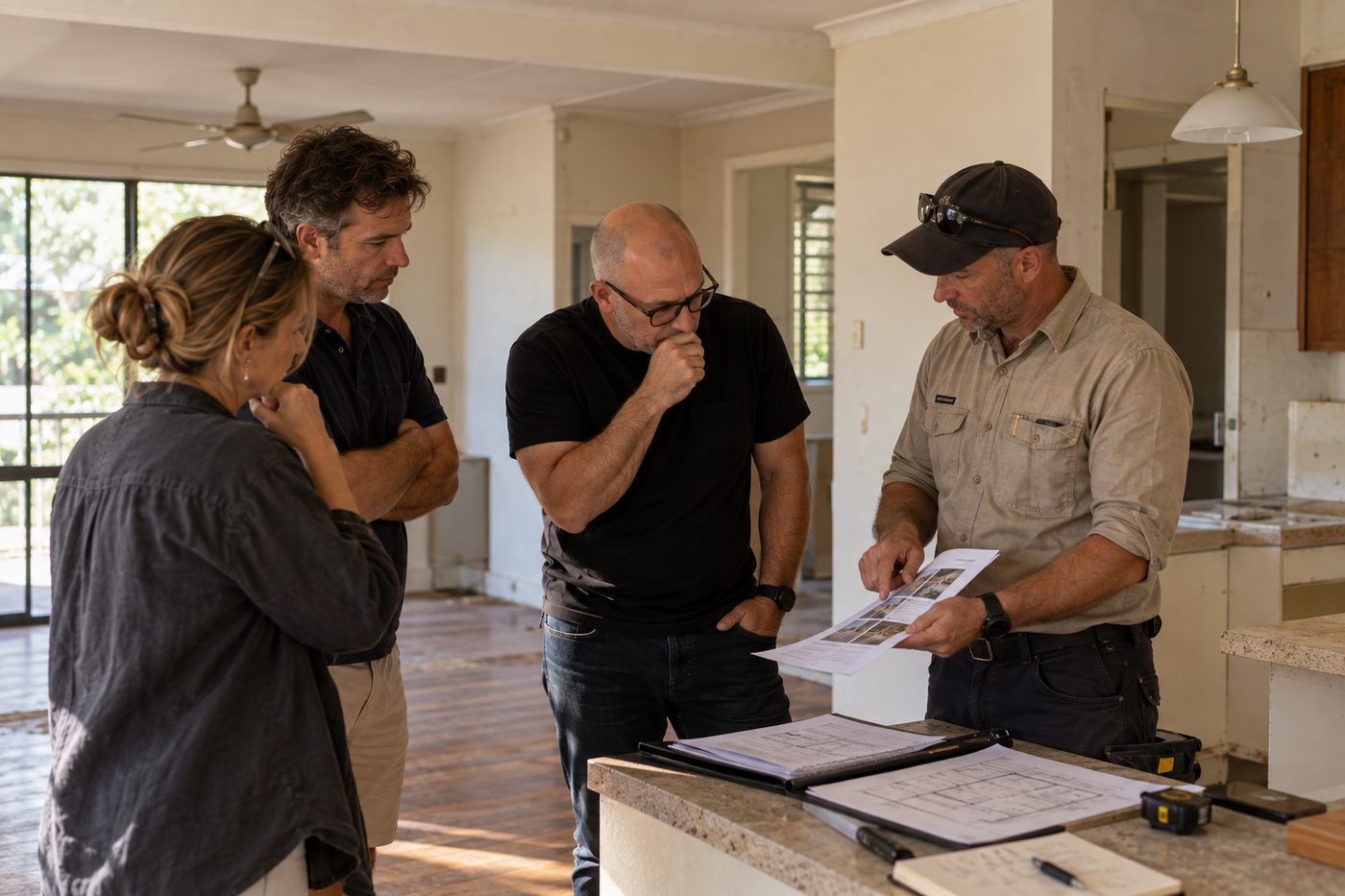
Yes, licensing is a threshold requirement, and you should verify it yourself before engaging anyone. Buyer's agents must comply with state and territory real estate licensing laws. In Queensland, a buyer's agent must hold a real estate agent licence, or work under one as a registered salesperson, issued by the Office of Fair Trading under the Property Occupations Act 2014. Other states differ. In NSW, for example, a buyer's agent needs a real estate licence or a Certificate of Registration, according to Westpac.
Check the relevant state public register before signing anything. In Queensland, that is the licensee register maintained by the Office of Fair Trading. A quick register search confirms whether the person is currently licensed and whether any disciplinary action sits on their record.
Licensed buyer's agents are subject to the same general rules of professional conduct as other estate agents. They must act in your best interests and keep you informed of each stage of the negotiation of a purchase price, in accordance with your instructions.
How do they charge, and which fee structure actually serves you?
Fee structures vary, and the one you choose can shape the advice you receive. Common structures include a fixed fee, a success fee or percentage of the purchase price often cited around 1 to 3 percent, a retainer plus success fee, and auction only representation fees. Westpac notes a percentage range generally around 1.5 to 3.5 percent, with some agents also charging an upfront retainer.
Commissions and fees for buyer's agents are not set by law and can be negotiated. That means the first quote is not the final word. Ask what is included, what is excluded, and what happens if the engagement ends early.
The conflict point matters. A percentage of price fee can disincentivise a buyer's agent from negotiating the lowest sale price, because they would receive less commission. A fixed fee removes that tension, while a retainer plus success fee splits the difference. Ask what you are charged if no property is found, and whether any guarantee period, such as six months, applies.
Do they represent buyers only, or do they also sell property?
Exclusivity matters because an agent who also acts for sellers carries a structural conflict. The law already prevents dual representation on the same transaction, but a practice that sells property alongside buying advocacy is still balancing two masters across its book of work.
Ask directly whether they receive rebates, discounts, commissions or other benefits from third parties or referred service providers. Licensed buyer's agents must declare any commission received from realtors or third parties. Ask them to put that answer in writing before you commit.
TDC is an example of a practice built around this question. The Design Concierge holds four brands: AVANTAGE, BUYERSEYE, The Concierge and REALens. Buyers advocacy is delivered through AVANTAGE, which acts only for the buyer from search to a finished home.
How many clients do they take on at once, and who actually does the work?
Capacity is a real quality signal, and it is worth asking about before you sign. One industry commenter on a PropertyChat thread noted that more than half a dozen clients at a time for one person becomes quite difficult to manage. A solo advocate carrying twenty active searches cannot give each one the attention a purchase decision deserves.
The common large agency structure is different again. In those businesses, a different person often handles the consult, the research, the under contract work and post settlement. That division can work, but only if you know who holds each role and how they communicate.
Watch for the onboarding pattern where new clients are added to the back of a buyers list, meaning minimal contact in the first month or two. Ask whether the person you meet at the initial consultation is the same person who will assist you through the purchase, and whether they attend inspections personally rather than sending a junior or a video walkthrough.
What should you ask about their experience and track record?
Ask the core questions first: how long they have been a licensed estate agent, how long they have acted as a buyer's agent, and how many buyers they have successfully helped to buy property. Then ask for their most recent purchases and whether they have local knowledge of your specific search areas.
One revealing question suggested on a 2026 PropertyChat thread is to ask about a deal that did not go through, and why. An advocate who can describe a failed negotiation honestly is one who understands risk, not just wins.
Success rates and references are hard to verify independently. Ask whether they will share details of past clients, and treat the answer as informative in itself. A flat refusal tells you something. A considered list of recent purchasers tells you something else.
What should the agency agreement cover before you sign?
The buyers' agency authority is the legal document that gives the agent authority to act for you and sets out the fees charged. Read it before signing, and confirm the time period the authority covers, the services included and excluded, the fee for services performed, and what you are charged if no property is found.
Ask whether you can terminate the authority if you are unhappy with the service, and whether a termination fee applies. Confirm the agent holds professional indemnity insurance. Ask how often and in what form you will receive progress updates, since agents must keep you informed at each stage of price negotiation.
A written agreement that answers all of these questions is a sign of a practice that respects the relationship. One that resists putting terms in writing is a risk you do not need to carry.
How do you choose between two good advocates?
Score both candidates against the same shortlist of questions so the comparison is like for like. Put independence and capacity above polish. An exclusive buyer only practice with a manageable client load is worth more than a large brand where you are one of many on a list.
Consider whether they help beyond the purchase itself, and whether the relationship is designed to keep you informed rather than simply transact. A buyers advocate who can speak to the full journey from search to finished home offers something a transaction only agent cannot.
Pricing should be quoted upfront and in writing. And before you commit to any buyers agency authority, it helps to be clear on the decision itself. REALens is a decision tool for buyers, a structured conversation and considered assessment that gives you clarity before you commit, independent of any purchase. The right advocate will welcome the questions, not deflect them.
Key takeaways

- A buyers advocate is a licensed estate agent who acts for the buyer, not the seller, and is paid by the buyer.
- An agent cannot act for you as a buyer's advocate and for the seller on the same property transaction.
- You sign a buyers' agency authority, which sets out the agent's authority and the fees charged.
- Buyer's agent fees are not set by law and can be negotiated; structures include fixed fee, percentage of purchase price, retainer plus success, and auction only.
- A percentage of price fee can work against you, because the agent earns less when they negotiate a lower price.
- Check licensing on your state's public register before engaging anyone, and confirm professional indemnity insurance.
- Ask how many clients the agent carries at once and whether the person you meet is the person who does the work.
References
- Property Occupations Act 2014 (Qld) · Queensland Government
- Office of Fair Trading · Queensland Government
- Questions to ask before choosing a Buyers Agent · PropertyChat, 11 January 2026
- What does a buyer's agent do? · Westpac, date unknown